On-premises messaging is worth the effort when an organization has a clear reason to keep its messaging system inside infrastructure it controls—and the people, budget, and processes to operate it properly. It is usually not worth it when the main goal is simply to avoid cloud services or gain a vague sense of “more security.” Greater control can be valuable, but it also transfers substantial responsibility from a provider to the organization.
What on-premises messaging actually means
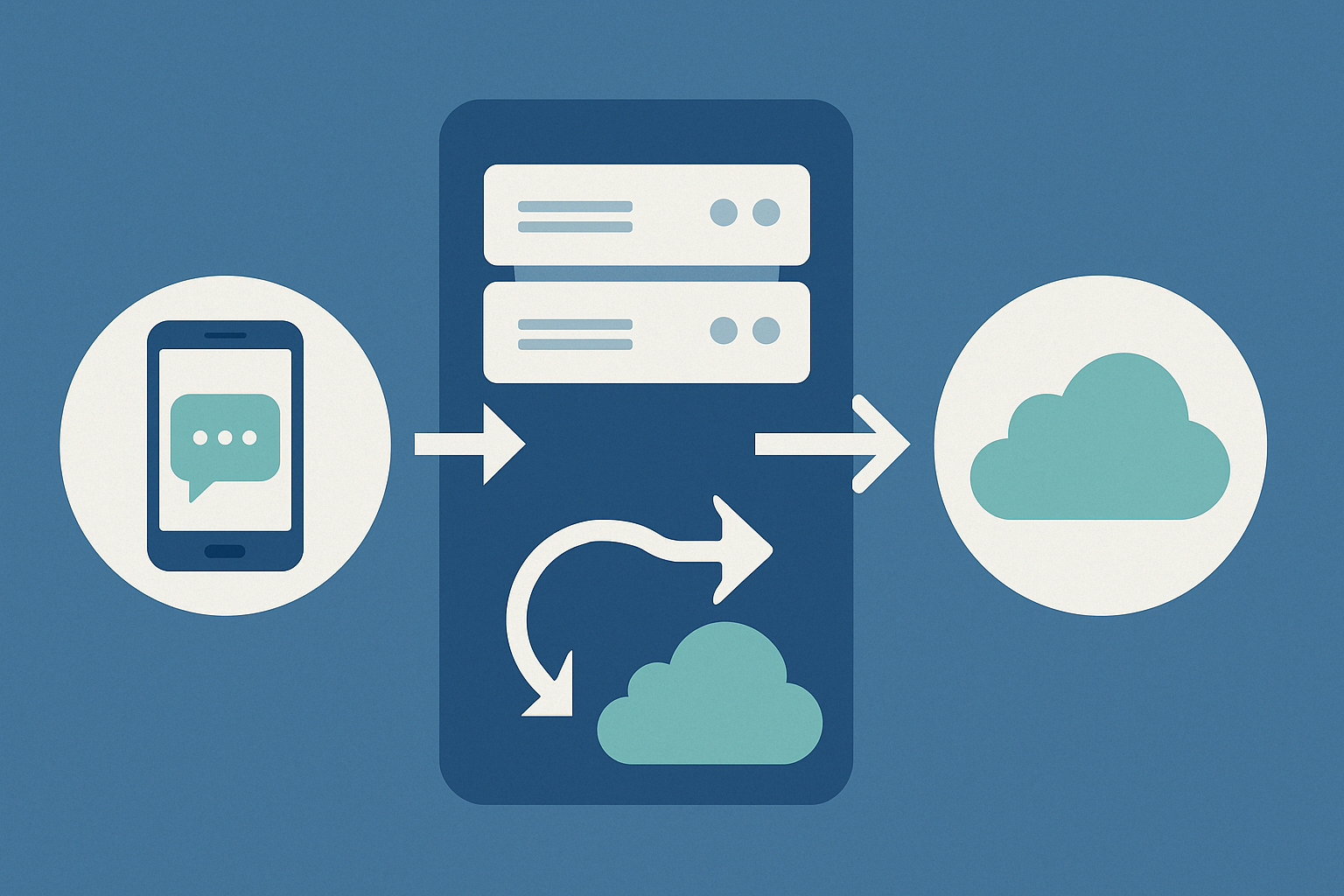
An on-premises messaging system runs within infrastructure controlled by the organization, usually in its own office, data center, or colocated facility. The organization typically manages the application, servers, storage, network access, and operating environment.
This is narrower than self-hosting. A self-hosted system can run on rented cloud infrastructure while still being administered by the organization. A private cloud or dedicated vendor-managed environment may also provide isolation and administrative control without being on premises.
On-premises deployment does not necessarily mean buying physical servers, owning the source code, or developing a messaging application. It describes where and under whose operational control the system runs.
What the organization gains
The main benefit is not automatic privacy or security. It is the ability to make more of the important technical and operational decisions internally.
- Infrastructure control: The organization can decide where the service and its stored data reside.
- Network control: Access may be restricted to an internal network, a private connection, or an approved remote-access method.
- Administrative autonomy: Internal administrators can manage accounts, permissions, updates, integrations, and system settings.
- Retention control: The organization can design retention, deletion, backup, and archive processes around its own requirements, subject to the platform’s capabilities.
- Customization and integration: Some systems can be connected to internal directories, authentication services, monitoring tools, or business applications that are not exposed publicly.
- Reduced dependence on a shared service: Changes to a public cloud platform may have less effect when the organization operates its own deployment.
These benefits depend on the chosen software and license. Running a server does not guarantee complete data portability, unrestricted customization, or independence from the software vendor.
What “more control” requires in practice
A messaging service is not a device that can be installed and forgotten. It is an ongoing business system that may contain sensitive conversations, files, account information, and activity records.
Someone must install security updates, renew certificates, manage user access, review logs, monitor storage, test backups, and respond to outages. Remote access must be designed securely. If the system becomes unavailable, the organization needs a recovery plan and another way to coordinate the response.
Security responsibility also changes. A well-maintained on-premises deployment can support strong security controls, but a neglected one can remain exposed to known vulnerabilities. Encryption protects particular data in particular situations; it does not replace access controls, patching, endpoint security, or sound administration. End-to-end encryption, where available, is a separate design feature and may limit server-side search, moderation, archiving, or integrations.
Backups require special attention. A backup is a recovery copy, while an archive is a record retained for later access or business purposes. Both need appropriate access restrictions, retention periods, and deletion procedures. Saving every message indefinitely is not automatically safer or more compliant.
When the effort is likely to be justified
On-premises messaging is most defensible when it solves a specific requirement that a suitable hosted service cannot meet as effectively.
The service must operate within a restricted network
A factory, research facility, secure office, or other controlled environment may need internal communication even when internet access is limited or intentionally unavailable. A local deployment can keep communication within that environment, although administrators still need a safe process for obtaining updates and maintaining the system.
Data location or infrastructure control is a firm requirement
Contracts, internal risk policies, customer expectations, or sector-specific obligations may require particular data-handling arrangements. On-premises hosting can support those arrangements by giving the organization direct control over storage and administration. It does not, by itself, guarantee compliance; policies, configurations, access records, retention practices, and operating procedures still matter.
Existing internal systems require close integration
An organization with established identity management, internal applications, monitoring, and data-protection processes may be able to integrate messaging into the same environment. This is more compelling when the necessary infrastructure and expertise already exist than when they must be created solely for chat.
The organization has sustainable operational capacity
A capable IT team, defined ownership, monitoring coverage, backup procedures, and a maintenance budget make on-premises deployment realistic. The key word is sustainable: the system must remain manageable during staff absences, turnover, emergencies, and future upgrades.
The value of control exceeds the full operating cost
For a sufficiently large or specialized organization, long-term control may justify infrastructure and staffing costs. The calculation should include more than software licenses and server hardware. Administrator time, support, redundancy, backup storage, security work, power, networking, and disaster recovery all contribute to total cost.
When a hosted option is usually the better fit
On-premises messaging is often a poor choice for a small organization without dedicated technical staff. If the system would depend on one employee or outside consultant who is not consistently available, routine maintenance can become a continuity risk.
It may also be unnecessary when the requirements are standard: dependable messaging, managed updates, mobile access, common integrations, and straightforward user administration. A reputable hosted business platform can shift much of the infrastructure work to a provider while still offering meaningful control over accounts, permissions, retention settings, and exports.
Other warning signs include:
- The project is motivated mainly by discomfort with “the cloud,” without defined technical or business requirements.
- No one has been assigned responsibility for updates, monitoring, backups, or incident response.
- The budget covers initial installation but not ongoing operation and replacement costs.
- Users need reliable access from many locations, but the organization lacks experience securing and supporting remote connections.
- The team expects on-premises hosting to guarantee privacy, security, uptime, or regulatory compliance.
- A managed private environment or self-hosted cloud deployment would satisfy the same needs with less operational burden.
A practical way to make the decision
Start with requirements rather than a preferred deployment model. Identify which conversations and files the system will handle, who needs access, where users work, how long data should be retained, and what level of downtime the business can tolerate.
Then compare realistic options using the same criteria:
| Question | What to establish |
|---|---|
| Why must it be on premises? | A specific network, data-location, integration, contractual, or operational requirement |
| Who operates it? | Named responsibility for administration, patching, monitoring, and support |
| How is failure handled? | Tested backups, recovery targets, redundancy where necessary, and an outage communication plan |
| How will users connect? | Secure internal and remote access, authentication, device policies, and offboarding procedures |
| What does it truly cost? | Software, infrastructure, labor, support, security, backup, and lifecycle replacement |
| Can the organization leave later? | Usable exports, documented migration options, and an understanding of data formats and limitations |
If the case remains strong after answering those questions, on-premises messaging may be a sensible investment rather than unnecessary complexity. If the benefits are unclear or the operating responsibilities have no credible owner, a managed private service, private cloud deployment, or conventional hosted business platform will usually deliver a more dependable result with less effort.